

A week off turns into two. An illness, a job, a family crisis or just a busy stretch, and suddenly your study rhythm is gone and the pile feels too big to start.
The instinct is to plan a huge catch-up weekend. It rarely works. What works is restarting small and building back up, one step a day.
Start by clearing the runway
Before you study anything, get every commitment out of your head and onto one page: deadlines, readings, missed classes, upcoming tests. Seeing it all in one place usually makes it feel smaller than it did in your head.
Use one short focus block, not a marathon
Plan a single 25-minute session with a five-minute break afterwards. Pick one task and do only that. One finished block is worth more than a planned five-hour session that never starts.
Tie it to a start cue, the same time, place or ritual each day, so starting stops being a decision.
Remove one source of friction
Look at what got in the way: phone, noise, an unclear task, no space to work. Fix just one thing. Small fixes compound quickly when you are restarting.
At the end of the week, keep what worked and set a minimum weekly commitment you can hold even in a bad week.
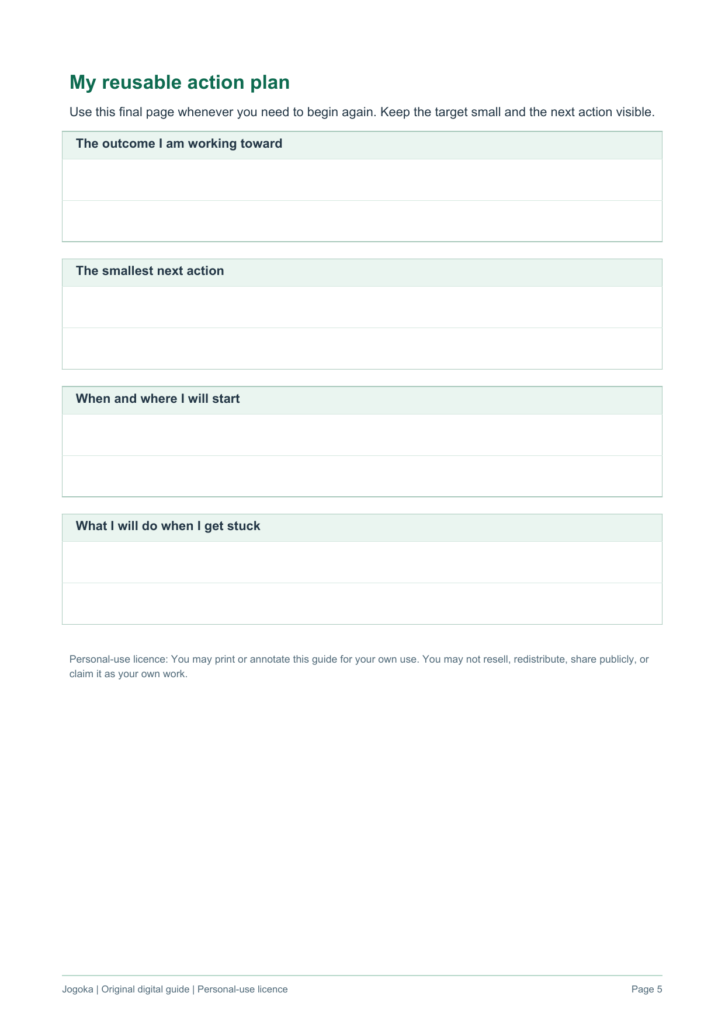
Focus Sprint: 7-Day Study Restart Guide & Worksheet (PDF) walks you through exactly this, one day at a time: clear the runway, build a start cue, use one focus block, remove one friction point, review what worked, make a small plan and keep the minimum. It is a 5-page PDF with a reusable action plan for the next time you need a restart.
You do not need to catch up on everything this week. You just need to start again and keep going.