Best Home Lighting for Every Room: Expert Guide 2026
Lighting is one of the most underrated elements of interior design. Get it right and every room looks polished, welcoming, and functional. Get it wrong and even expensive furniture looks flat. This guide walks you through choosing the best lighting for every room in your home in 2026.
The Three Layers of Home Lighting
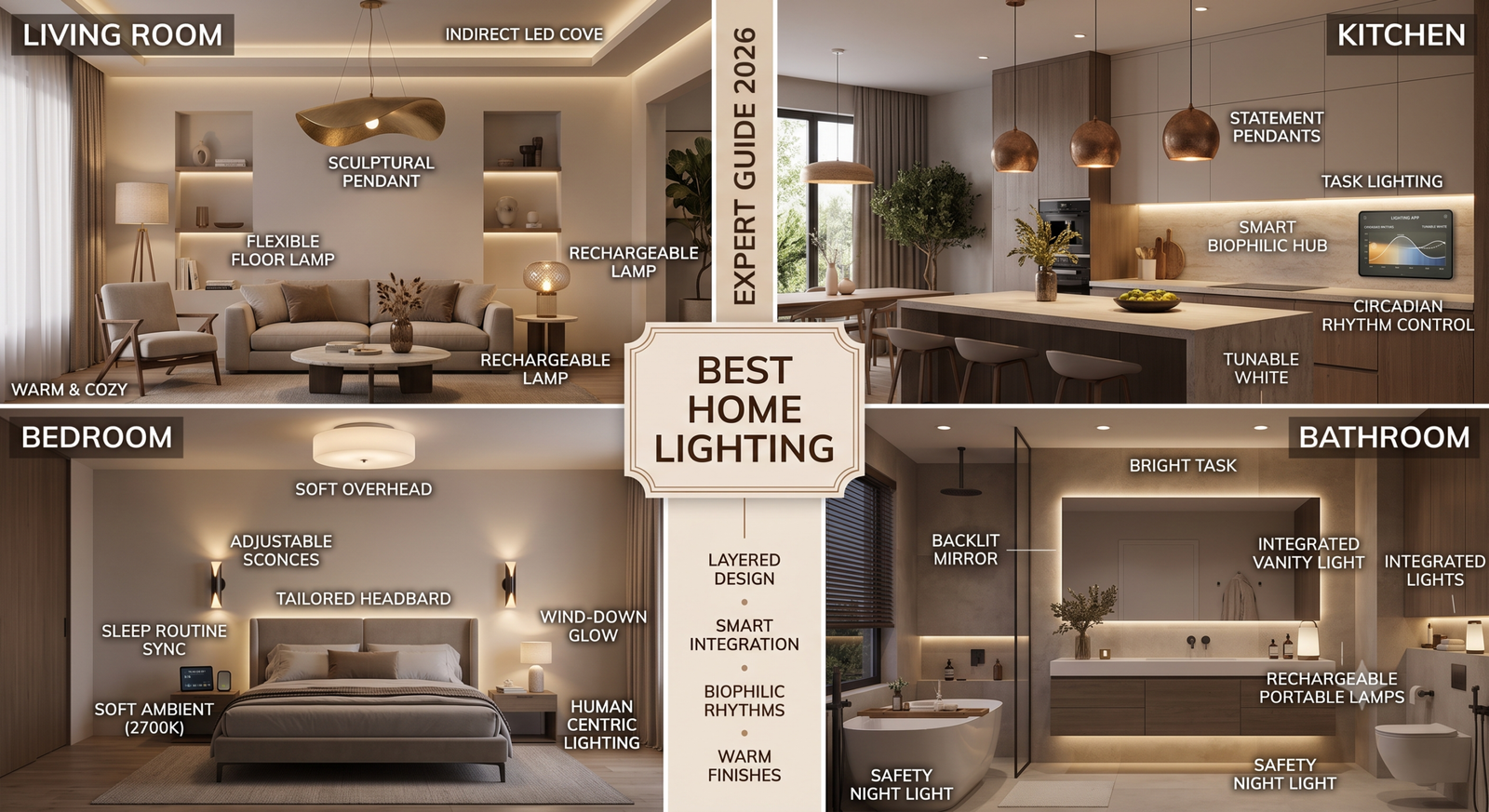
Every well-lit room uses three distinct types of lighting working together:
- Ambient lighting — The base layer. Ceiling lights, recessed downlights, and pendant fixtures provide general illumination for the whole room.
- Task lighting — Focused, brighter light for specific activities: reading, cooking, working at a desk.
- Accent lighting — Decorative light that creates mood, highlights artwork, or defines architectural features. Wall lamps, LED strips, and colour-changing lights fall here.
The goal is to layer all three types rather than relying on a single overhead fixture.
Living Room Lighting
Your living room needs flexibility. During the day it should feel bright and airy; in the evening, warm and intimate. A dimmable ceiling fixture provides the ambient base, while table lamps and floor lamps on either side of the sofa add warmth and reduce harsh shadows.
For 2026, arc floor lamps are trending as statement pieces that also double as reading lights. LED wall sconces on either side of a TV or fireplace add symmetry and a boutique-hotel feel.
Bedroom Lighting
The bedroom needs calm, warm lighting that supports winding down. Overhead lights should be on a dimmer and set to warm white (2700K–3000K). Bedside lamps or wall-mounted reading lights on each side of the bed are essential for couples with different sleep schedules.
Night lights with colour-changing capability are increasingly popular for bedrooms — especially children’s rooms. RGB remote-controlled night lights let you shift from a calming blue to a warm amber depending on the time of night, helping regulate sleep cycles naturally. Browse our Lighting collection for top-rated colour-changing options.
Kitchen Lighting
Kitchens need bright, cool-white task lighting (4000K–5000K) over work surfaces, combined with warmer ambient lighting for the dining and social areas. Under-cabinet LED strips are one of the most cost-effective upgrades you can make to a kitchen — they eliminate prep-area shadows immediately.
If you have an island or breakfast bar, pendant lights hung at 75–85 cm above the surface are the designer standard. Three pendants in a row over a long island is a classic that works in any style kitchen.
Bathroom Lighting
Bathrooms are often over-lit with a single bright overhead fixture, which creates unflattering shadows. The best bathroom lighting uses a vertical light or two on either side of the mirror (not above it) for shadow-free task lighting, combined with a ceiling fixture for general ambient light. LED mirror lights with built-in anti-fog heating are a popular upgrade. See our Bathroom collection for bathroom-rated lighting options.
Smart Lighting: Is It Worth It?
Smart bulbs and smart switches are now genuinely affordable. The main benefits are scheduling (lights automatically dim in the evening to signal bedtime), voice control, and the ability to set scenes for different activities. Entry-level smart bulbs start around $10–15 each and work with Amazon Alexa and Google Home.
For a whole-home smart lighting setup, start with the rooms you use most (living room, bedroom) and expand over time. The most important rooms to automate are those where you want mood variation — not utility spaces like laundry rooms or garages.
Frequently Asked Questions
What colour temperature is best for living rooms?
Warm white (2700K–3000K) is the most flattering and relaxing for living rooms. Reserve cool white (4000K+) for kitchens and home offices where task performance matters more than ambience.
How many lumens do I need per room?
As a guide: living rooms need 1500–3000 lumens total; bedrooms 1000–2000; kitchens 4000–8000 (more for cooking areas); bathrooms 4000–8000. Always use dimmable fixtures so you can adjust based on the time of day.
Are LED lights worth it over halogen?
Absolutely. LED bulbs use 75–80% less energy than halogen equivalents, last 15–25x longer, and produce far less heat. A halogen bulb that costs $2 will cost far more in electricity over its lifetime than a $6 LED that lasts a decade.
Shop Lighting at Jogoka
Our lighting range spans wall lamps, ceiling fixtures, night lights, smart lighting, and outdoor options — all with free 3–5 day delivery and a 30-day return guarantee. Browse All Lighting →