You sit down to study, open the textbook, and feel nothing. No pull, no drive, just the blank resistance of a task you know you should be doing. The advice everywhere says to “find your motivation.” But motivation was never the thing missing.
Waiting to feel motivated before you study is waiting for a mood that may not show up on the day you actually need it — the day before the exam, not the day you feel inspired.
What’s actually behind the resistance
Procrastination on studying is rarely laziness. More often it’s one of three things: the task feels too big to start, there’s no clear first step, or the last few study sessions didn’t feel like they worked — so some part of you has quietly decided studying isn’t worth the discomfort.
None of those are solved by waiting to feel inspired. They’re solved by removing the ambiguity — a smaller starting point, a clearer routine, visible proof that the effort is paying off.
Building a system for your low-energy days
A motivation system built only for your best days is not a system — it’s a plan that only works when you least need it. The actual test is what happens on a low-energy Tuesday: is there a small enough version of the task that you can still start it?
Small wins compound. A five-minute review session you actually finish rebuilds more momentum than a two-hour session you plan and skip. Consistency, not intensity, is what turns studying into a habit instead of a battle you have every single day.
Turning this into something you don’t have to think about
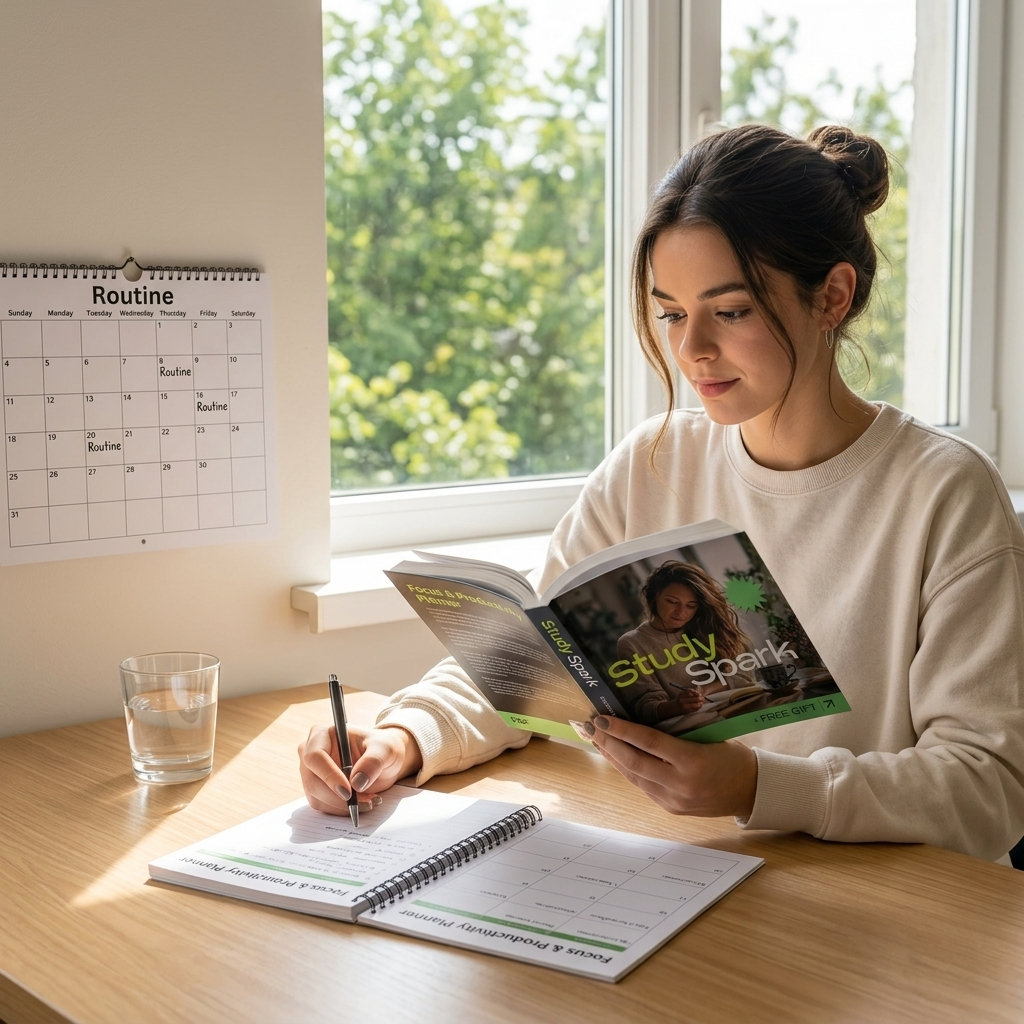
That’s exactly what Study Sparks – Study Motivation Guide for Students is built to do — practical, no-fluff “sparks” for finding your real reason to study, building routines that survive low-energy days, using AI tools for focus without getting distracted by them, and tracking effort so progress actually feels visible.
It won’t make studying feel effortless. It’ll make it something you can start on the days it doesn’t.