How to Handle Criticism with Confidence: A Calm, Practical Guide for 2026
Criticism stings. Whether it lands in a performance review, a comment from a partner, or a stranger’s reply online, that first hot flush of defensiveness is almost universal. But the people who grow fastest are not the ones who never get criticized, they are the ones who have learned to stay calm, take what is useful, and let the rest go. The good news: handling criticism with confidence is a skill, not a personality trait, and this guide walks you through exactly how to build it.
Why criticism feels so threatening
Your brain treats social disapproval a lot like physical danger. A critical comment can trigger the same fight-or-flight response as a near-miss in traffic, which is why your heart races and your thoughts scramble. Understanding this is the first step, because once you know the reaction is automatic, you can stop treating it as proof that something is wrong with you.
The difference between feedback and noise
Not all criticism is equal. Some of it is genuinely useful information about your work or behavior. Some of it is just someone else’s bad mood, projected onto you. Learning to sort the two quickly is what separates calm, confident people from those who spiral after every comment.
5 practical steps to handle criticism calmly
1. Pause before you react
The most powerful move is also the simplest: do not respond immediately. Take one slow breath. That two-second gap lets your thinking brain catch up with your emotional brain, so you respond instead of react.
2. Get curious instead of defensive
Try asking a clarifying question: “Can you tell me more about what you mean?” This does two things, it buys you time to settle, and it shifts you from defending to understanding. People who feel heard usually soften their delivery, too.
3. Separate the message from the delivery
Sometimes valuable feedback arrives wrapped in a rude tone. Train yourself to extract the useful part and discard the packaging. You can decide the delivery was unfair and still keep the one helpful insight inside it.
4. Decide what to do with it, on your terms
You are allowed to thank someone for feedback and then choose not to act on it. Confidence is not about accepting every opinion, it is about evaluating each one calmly and deciding for yourself.
5. Reset afterward
If a comment rattled you, do not carry it all day. A short reset, a walk, a few deep breaths, writing down what was actually said versus what your mind inflated it into, keeps one piece of criticism from coloring everything else.
A simple guide to make this stick
Reading the steps is easy. Doing them in the heat of the moment is harder. That is why we created a calm, practical digital guide that turns these ideas into a repeatable routine you can rely on the next time criticism catches you off guard.
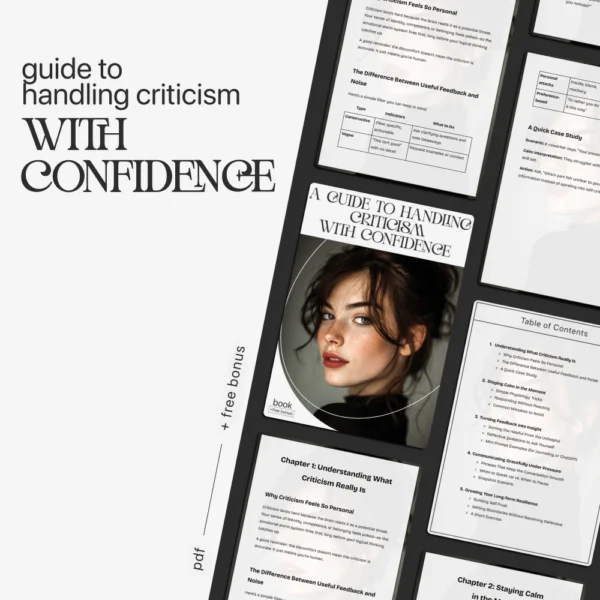
Get A Guide to Handling Criticism with Confidence
Instant download | No shipping | 30-day money-back guarantee
Keep building your emotional intelligence
Handling criticism well is one piece of a bigger picture. If you found these ideas helpful, these companion guides pair perfectly with it:



Building Confidence Without Bragging
More guides to strengthen your emotional intelligence
If this helped, these instant-download companions go even deeper. Hover to pause, tap any card to explore.
How to Stop OverreactingMaster Your EmotionsBuilding Confidence Without Bragging Self-Discovery Checklist
 Self-Improvement Checklist
 30 Days to a Better YouHow to Stop OverreactingMaster Your EmotionsBuilding Confidence Without BraggingSelf-Discovery ChecklistSelf-Improvement Checklist30 Days to a Better You
Read next: How to Be Confident Without Bragging: 7 Quiet-Confidence Habits That Actually Work — a perfect companion read for staying grounded under pressure.
Share this article:
Facebook | X (Twitter) | WhatsApp | LinkedIn | Pinterest