
It starts with a brilliant plan. A tower of blocks, a paper aeroplane, a drawing that has to look exactly right. Then it falls over, nose-dives or comes out wrong, and suddenly there are tears, stamping feet or a crumpled page flying across the room.
Frustration is one of the first big feelings young children meet, and one of the hardest to sit with. The good news is that the skills that help, pausing, asking for help and trying again, can be practised long before the next meltdown.
Name the feeling out loud
Children often feel frustration in their bodies before they have words for it: a hot face, tight fists, buzzing thoughts. Saying it for them (“Your tummy feels hot because the tower keeps falling”) shows them the feeling has a name and that you are not scared of it.
Keep it short and calm. The goal in the moment is not to fix the tower but to help them notice what is happening inside.
Teach the pause before the fix
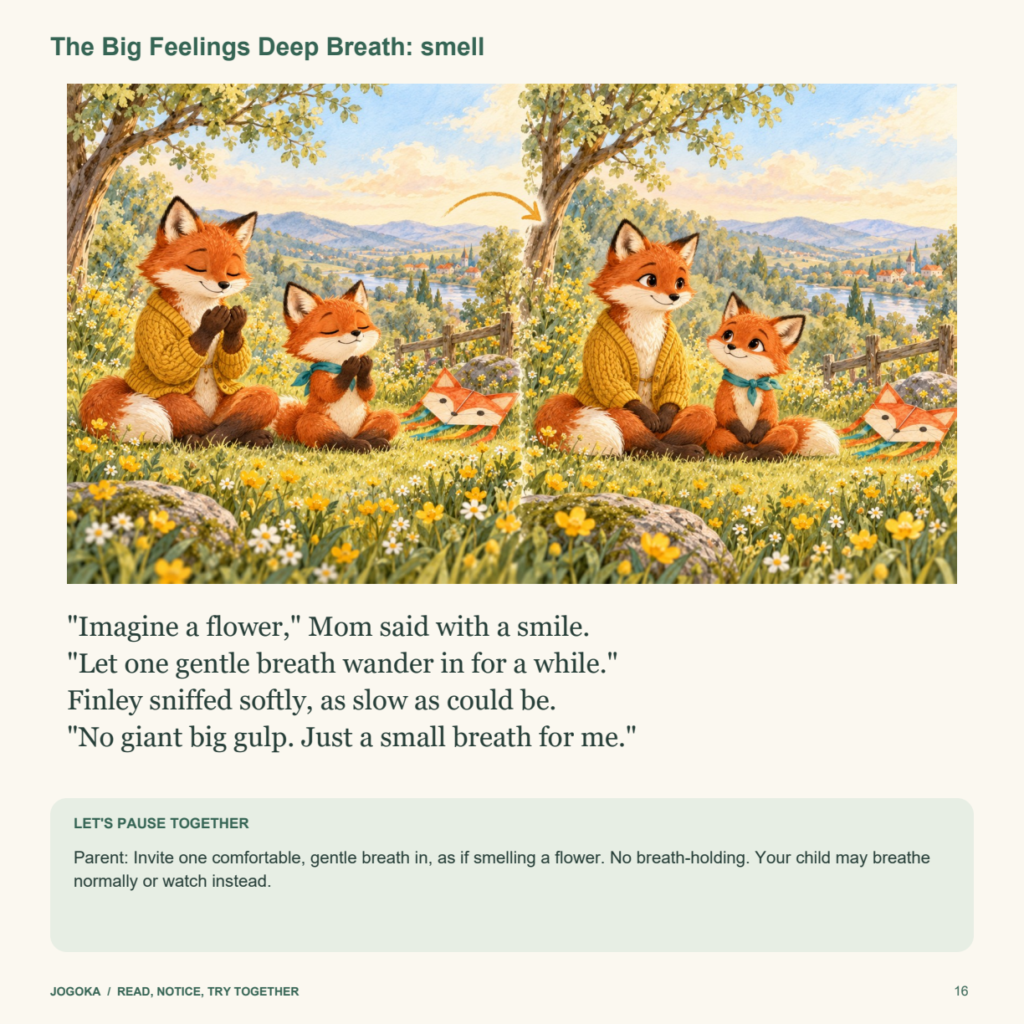
A pause can be one slow breath, counting to five, or imagining smelling a flower and blowing out a candle. Practise it on calm days so it is familiar when things go wrong.
Once they have paused, invite one small change rather than a whole new plan: a wider base for the tower, a different fold for the aeroplane. Small changes make trying again feel possible.
Make asking for help normal
Many children see asking for help as giving up. Model it yourself (“I am stuck on this, can you hold that end?”) and praise them when they ask, whatever the result.
Stories are one of the easiest ways to practise all of this, because a child can watch a character feel frustrated, pause and try again without being in the spotlight themselves.
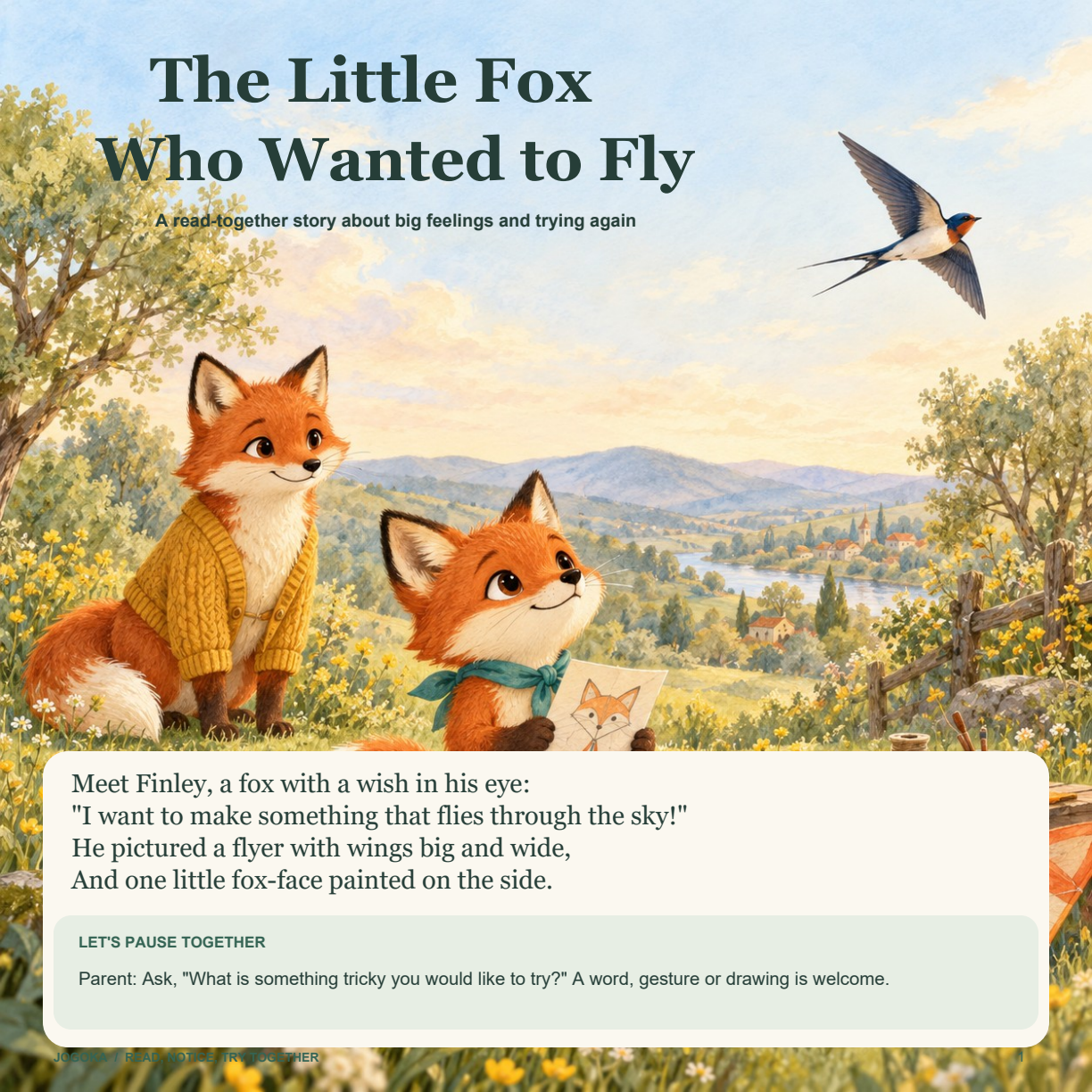
That is exactly what The Little Fox Who Wanted to Fly: A Story About Big Feelings (PDF Picture Book) does. Finley the fox has a wonderful idea, building a fox-shaped kite, and when it flops he feels his tummy go hot and his thoughts start to buzz. With Mom beside him, he learns to pause, ask for help and try a small change. It is a 24-page illustrated PDF for ages 4–8 with short rhyming text, read-aloud prompts and activity pages you can print at home.
Read it together on a calm evening, then come back to Finley the next time a plan goes wrong. A shared story gives you both the words for next time.
Get The Little Fox Who Wanted to Fly — $2.99, instant PDF download