Most people do not need another strict meal plan. They need a simple way to make everyday food decisions before they are tired, rushed, hungry, or standing in front of an almost-empty fridge. A meal planning tracker can provide that structure without telling you exactly what to eat.
This guide explains how to use a flexible meal planning tracker to build a calmer weekly food routine. You will learn how to choose repeatable meals, shop with less waste, handle busy days, and review what actually works for you.

What a meal planning tracker is designed to do
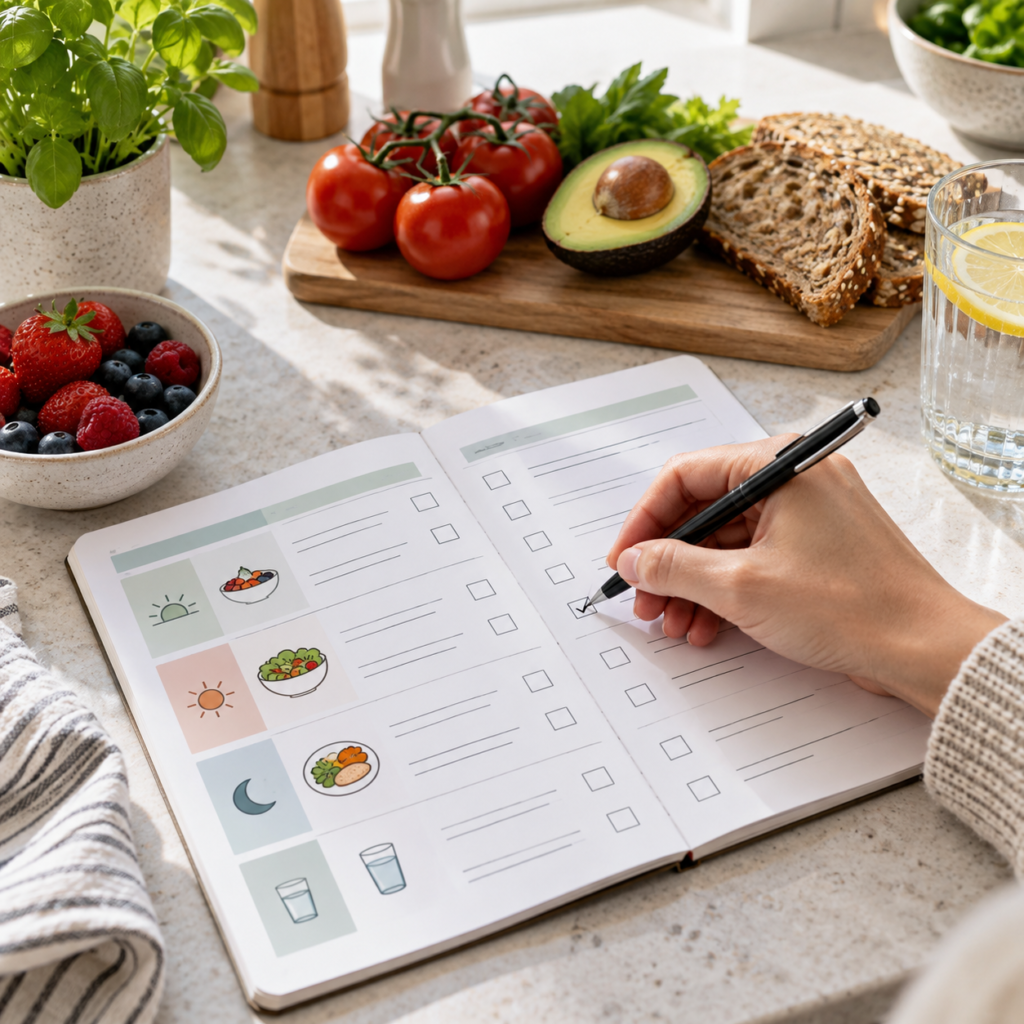
A meal planning tracker is a practical record of the meals you plan, the ingredients you need, and the routines that make those choices easier. It is not a test of willpower. Used well, it reduces the number of decisions you have to make each day.
The best tracker is flexible. It gives you prompts for breakfast, lunch, dinner, snacks, grocery shopping, and reflection, but it leaves room for your preferences, culture, schedule, budget, and appetite. Instead of creating a perfect menu, you are creating a system you can repeat.
Start with meal frameworks, not a fixed menu
Rigid menus often fail because ordinary life changes. Work runs late, family plans shift, a grocery item is out of stock, or you simply do not want the meal you wrote down on Sunday. A framework works better because it gives you choices within a simple structure.
For each main meal, write down a few familiar options that fit one of these patterns:
- A protein source plus vegetables or fruit plus a satisfying carbohydrate
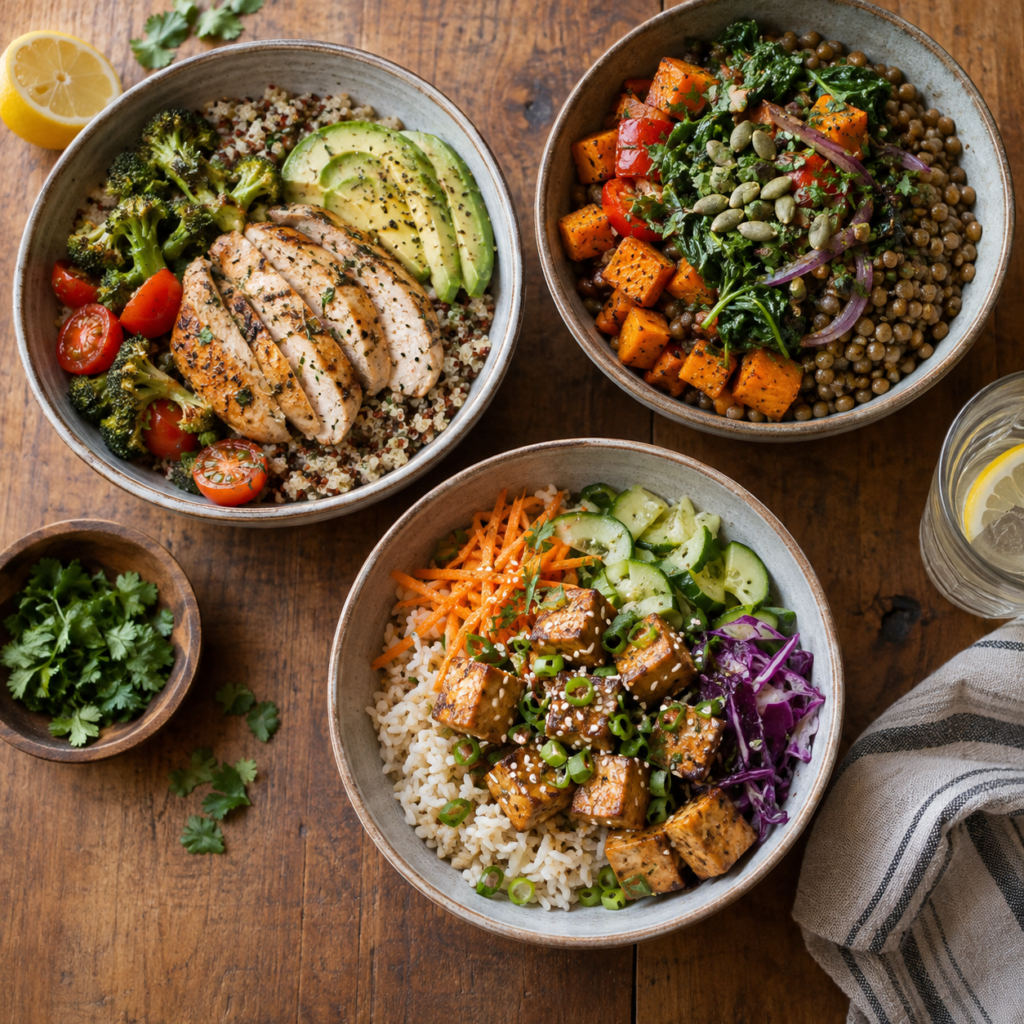
- A simple bowl, wrap, soup, or salad made from ingredients you already use
- A quick backup meal for days with little time or energy
Choose three breakfasts, three lunches, and three dinners that feel realistic. You do not need to cook nine different recipes. Repeating meals can reduce shopping pressure and help you learn what is genuinely convenient.

Use your meal planning tracker before the grocery shop
Before you shop, look at your next few days rather than an ideal week. Mark busy evenings, travel, meals out, and days when you need something quick. Then make a short list based on the meals you are most likely to eat.
A useful grocery prompt asks: What do I already have? What will I use first? What is one easy backup? This prevents buying ingredients for ambitious recipes that do not fit your actual week. It can also make home meals easier to begin because the first decision is already made.
Plan for difficult days in advance
The most valuable part of a meal planning tracker is often the reset plan. Everyone has days when planning did not happen. Your system should make those days easier, not turn them into a reason to stop.
Write down two or three backup choices you can use when time is limited. These might be a freezer meal, a quick sandwich with fruit, eggs on toast with vegetables, soup and bread, or another familiar option that works for you. The point is to have a next step ready.
When a day goes differently than expected, return to the next meal. A flexible routine is built by continuing, not by judging one choice.
Review your week and keep only what helps
At the end of each week, take five minutes to review your notes. Which meals were easiest to prepare? Which ingredients went unused? What made a meal feel satisfying? Which moments caused the most last-minute decisions?
Use the answers to adjust the next week. Over time, you will build a personal library of meals, grocery prompts, and backup options that suit your real life. This is more useful than copying a plan designed for someone else.
Get a ready-to-use 21-day planning system
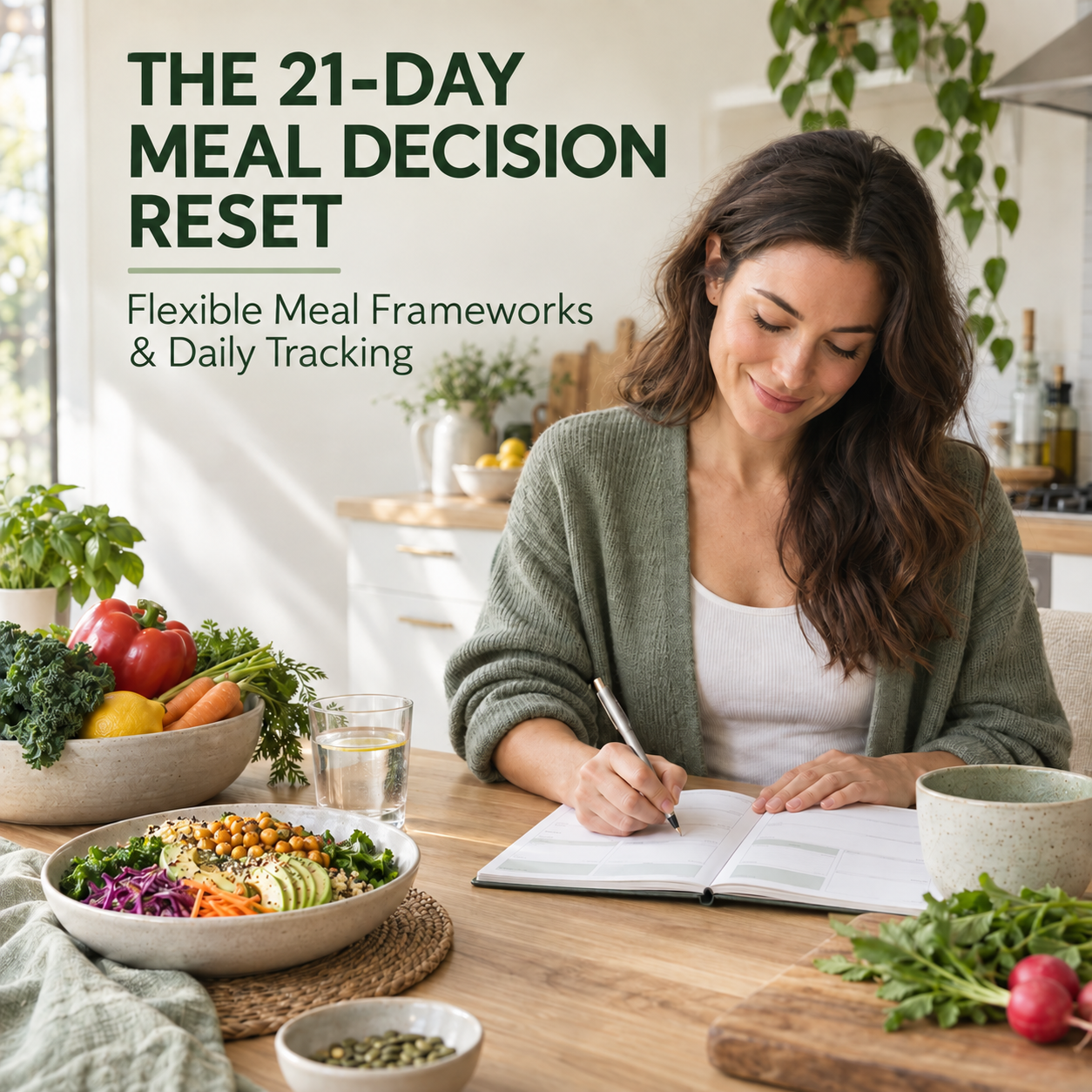
If you want the prompts, daily pages, weekly reflections, and audio guidance already organised for you, the 21-Day Meal Decision Reset meal planning tracker gives you a printable starting point. It is made for busy adults who want more consistent food routines without rigid menus or calorie counting.
For general healthy-eating education, you can also read the NHS Eat Well guidance. Adapt any planning tool to your own needs, and speak with a qualified health professional if you have a health condition or specific dietary requirements.
The next small decision matters
You do not need to plan every meal perfectly. Start with one simple action: choose tomorrow’s breakfast, list the ingredients for one easy dinner, or write down one backup meal. A meal planning tracker turns those small choices into a routine you can actually sustain.
Start the 21-Day Meal Decision Reset and make your next food decision easier.