
If you want to teach kids to include others, start by understanding their side. Your child runs to the same friend every morning. They share snacks, save each other a place on the carpet and invent games only the two of them understand. Then a new child joins the class, hovering at the edge of the group, and your child isn’t sure what to do. Make room and risk losing their spot? Or stay put and leave someone out?
For young children, this is a genuinely hard choice. Most of us want to teach kids to include others, but we rarely talk about the second half of the problem: children also worry that welcoming someone new means giving up the friend they already have. When we name both feelings, including others becomes much easier.
Why including others feels hard for young children
Between about four and eight, children are learning that friendships can be shared, but the idea still feels risky. A favourite friend is safety. Saving them a seat is a way of saying “you matter to me.” So when a new child appears, a child who hesitates is usually not being unkind. They are protecting something important to them.
It helps to start from that understanding rather than from a rule. “Be nice and let everyone play” tells a child what to do, but not how to handle the wobbly, twisty feeling of wanting two things at once. The best way to teach kids to include others is to start there. Children learn inclusion best when an adult helps them notice what everyone in the moment might be feeling, including themselves.
4 simple ways to teach kids to include others at home
1. Name both feelings out loud. Try: “You really want to sit with Sam, and you can see the new girl is on her own. Both of those make sense.” Hearing that both feelings are allowed lowers the pressure to choose, and that is the first step when you teach kids to include others.
2. Practise “and” solutions. Ask, “Is there a way to sit with Sam and make room for her too?” Children are surprisingly creative once they know the answer doesn’t have to be either-or: shuffle along, add a cushion, invite both friends into the same game.
3. Rehearse a welcome sentence. Shy children often want to include others but freeze. Practise one simple line at home, such as “Do you want to come and sit with us?”, until it feels easy to say. Role-play with toys works well too: let a teddy be the new friend and take turns being the one who invites. Small, playful rehearsals like this are one of the easiest ways to teach kids to include others.
4. Use stories to see the other side. A picture book lets a child stand in the new child’s shoes without any real-life pressure. Pausing to ask “What might she be thinking?” builds empathy and the habit of noticing who is left out. Naming feelings and caring about others are core social and emotional skills, as outlined in CASEL’s guide to social and emotional learning.
When the first try doesn’t work
When you teach kids to include others, expect a few bumps. Including others is a skill, and skills take practice. Sometimes the new child says no, the old friend feels left out, or the plan simply falls flat. That’s okay. Treat it as information, not failure: “That didn’t work. What could we try next time?” Children who see that a first attempt can be adjusted are far more likely to try again.
What to say when your child feels left out
Sometimes the roles flip, and your child is the one standing at the edge. Stay calm and curious: “It sounds like you wanted to join in. What happened?” Then help them plan one small step for tomorrow, like asking a single classmate to play. Children who know how it feels to be left out often become the ones who notice others, which is one more reason to teach kids to include others from both sides of the picnic blanket.
Keep the tone light and hopeful. The goal is not to fix every friendship, but to show your child that feelings can be talked about and that tomorrow is a fresh chance to try.
A read-together story about making room
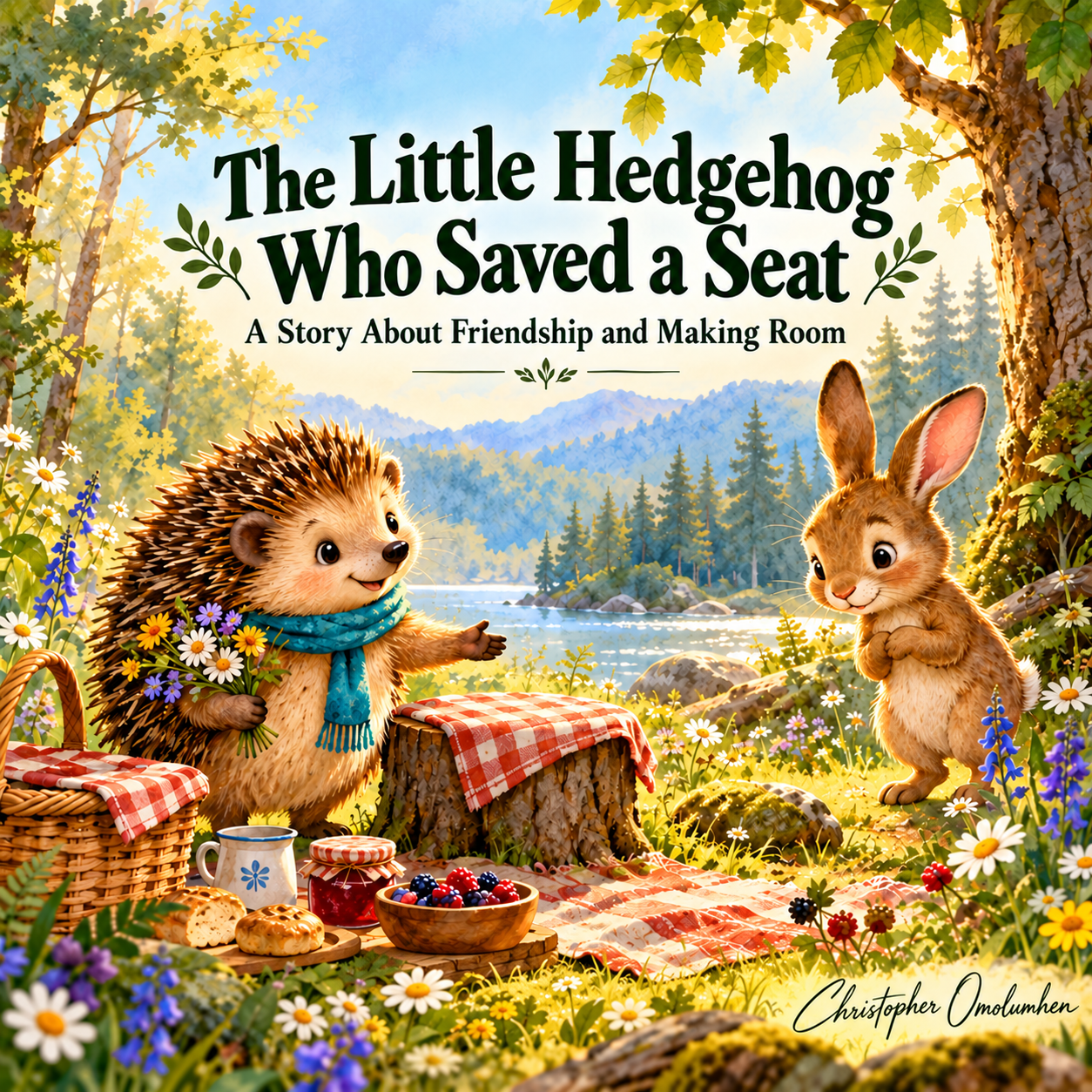
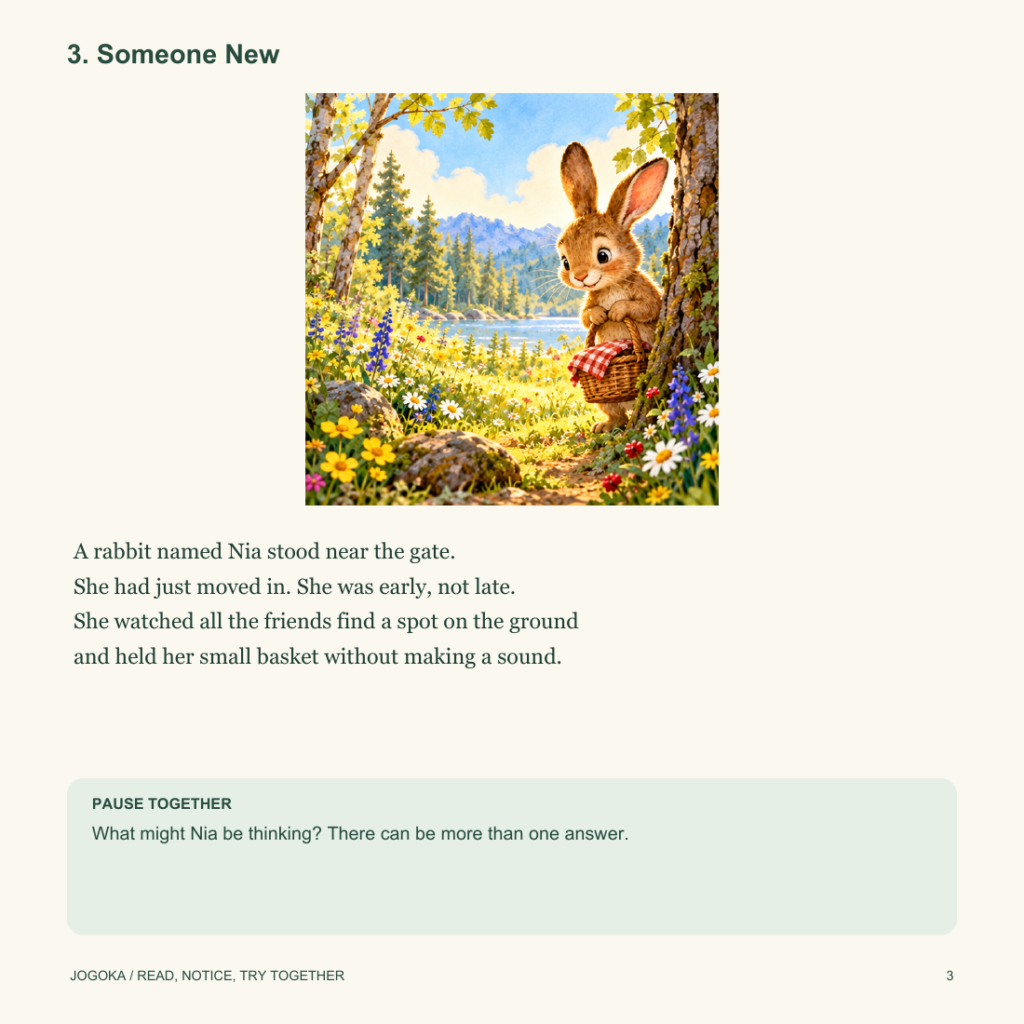
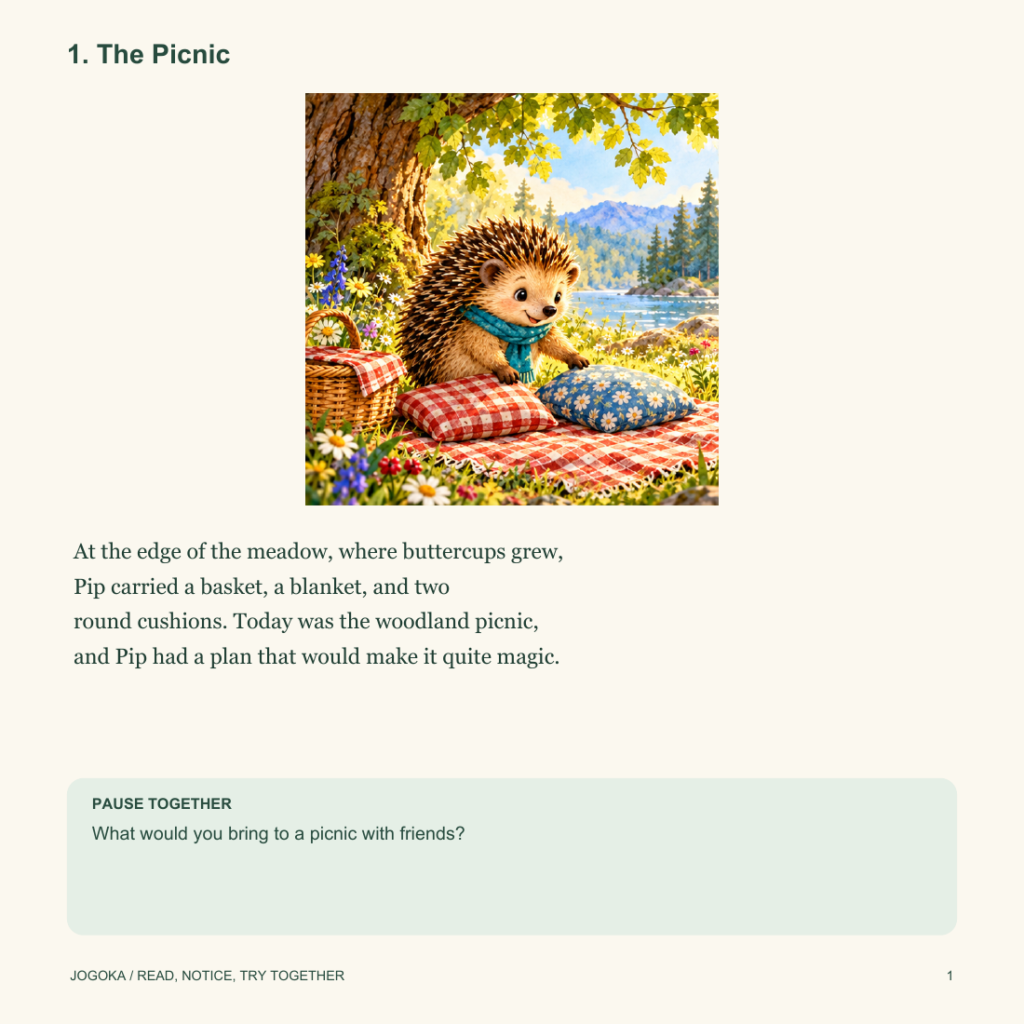
We wrote The Little Hedgehog Who Saved a Seat: A Story About Friendship and Making Room for exactly this moment. At a woodland picnic, Pip the hedgehog has saved a cushion for an old friend, Rowan. Then Nia the rabbit arrives, new to the neighbourhood and unsure where to sit. Pip wants to keep the promise to Rowan and help Nia feel welcome, and has to find a way to do both.
It’s a simple, warm way to teach kids to include others. Each part of the story ends with a short “Pause Together” question, so you and your child can stop, notice and talk. After the story, three activity pages invite your child to draw a picnic with room for everyone, practise an invitation and keep the conversation going. It comes as an illustrated PDF, plus the whole story as read-aloud audio, ready to read on a tablet or print at home. If your child enjoyed Finley in The Little Fox Who Wanted to Fly, Pip’s story uses the same gentle read, pause and talk approach.
You won’t teach kids to include others in one conversation. It grows a little every time a child notices someone on the edge and decides to make room.
Get The Little Hedgehog Who Saved a Seat — $4.99, instant PDF download