

Learning to keep a conversation going is mostly about curiosity. Being good at conversation is less about being witty and more about three simple skills: starting, continuing and finishing. Once each feels manageable, dates, friendships and networking events all get easier.
Here is how to practise each without turning it into a performance.
Openings: flexible beats clever
You do not need a killer first line. Comment on something you both share, such as the place, the event or the moment, then ask an open question. Have two or three options ready so you can pick whichever fits, instead of forcing a single script.

Follow-ups: listen for the hook
Good conversations run on curiosity. Listen for one detail in what the other person says, a place, a hobby, an opinion, and ask about it. “What got you into that?” works almost anywhere and keeps the focus on them, which most people enjoy.
Endings: leave it warm and clear
Many people avoid conversations because they fear not knowing how to end them. A simple, friendly close solves it: “I’m going to grab a drink, it was great chatting.” If you want to continue, say so directly. Clear beats awkward every time.
Practise before it counts
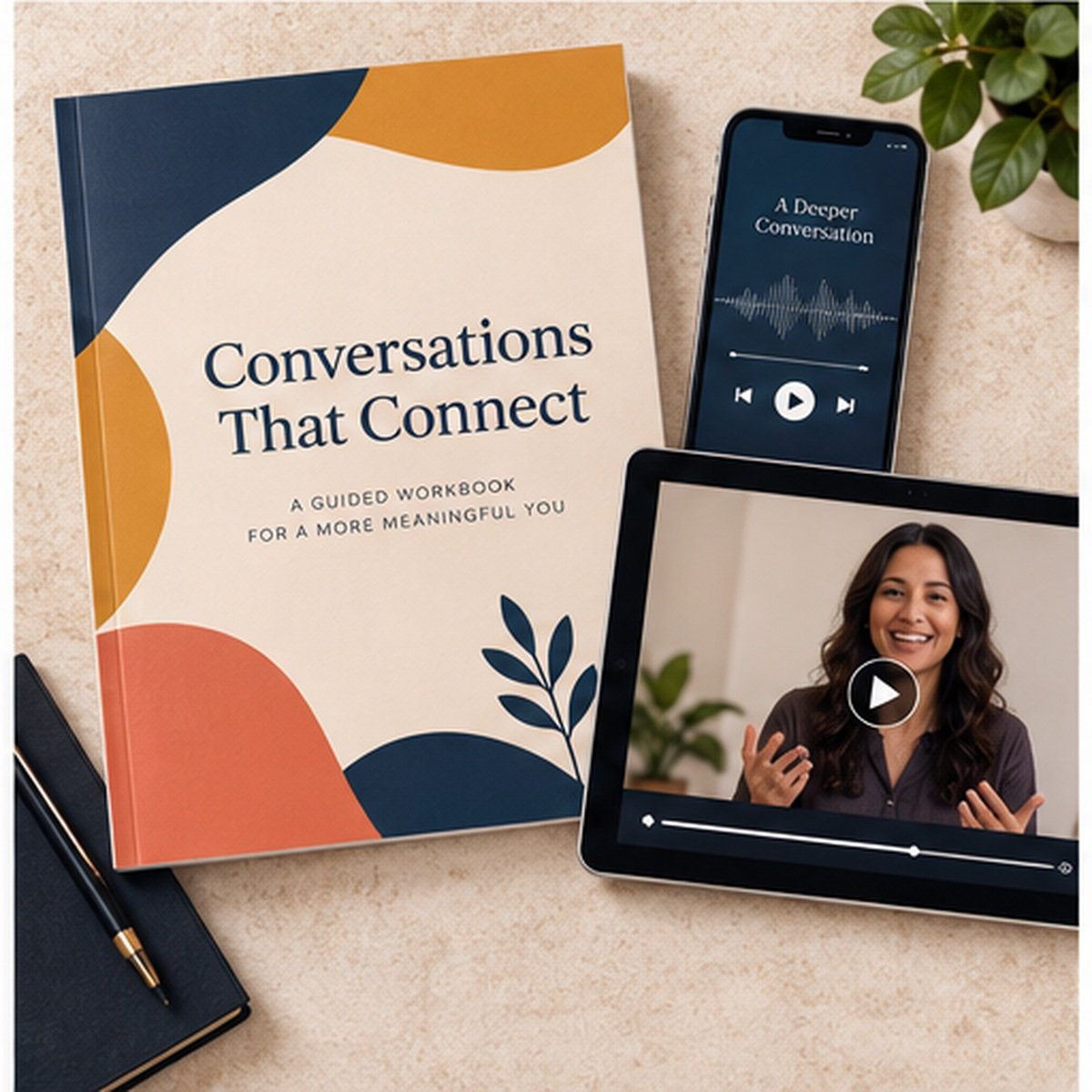
Rehearsing on paper or out loud makes the real thing feel familiar. Conversations That Connect | PDF + Audio + Video is an original Jogoka workshop that guides you through flexible openings, thoughtful follow-ups and clear endings for dates, friendships and professional events. It includes a 14-page PDF workbook, full MP3 narration and a captioned MP4 slide workshop, with exercises you can adapt to your own life.

Simple ways to keep a conversation going
If you want to keep a conversation going, aim for open questions that invite a story rather than a yes or no. “What was the best part of your week?” gives the other person room to answer, while “Did you have a good week?” usually does not. Sharing a small detail of your own in return keeps the exchange balanced.
Do not be afraid of pauses. A moment of quiet is normal, and it often leads to a more thoughtful answer. Even light small talk can lead somewhere interesting when both people stay curious, so treat it as a warm-up rather than a hurdle.
Five quick takeaways: open with something shared, ask open questions, listen for the hook, welcome the pauses, and end with a clear, friendly close.
Keep a conversation going on dates, with friends and at work
The same skills apply in different settings. On a date, share a little about yourself and ask about their interests. With friends, follow up on something they mentioned last time. At a professional event, ask what they are working on and what they enjoy about it. Each situation rewards genuine curiosity.
If you freeze, fall back on a simple structure: comment, question, follow-up. “This venue is lovely. Have you been here before? What did you think of it?” It is easy to remember, feels natural, and helps you keep a conversation going without needing to be clever.
A final tip is to treat each chat as practice rather than a performance. You do not need every exchange to be memorable; you only need to be present and interested. When you focus on the other person instead of on how you are coming across, you naturally keep a conversation going, and the nerves fade faster than you expect. Try setting a tiny goal, such as asking two follow-up questions in your next chat, and notice how much easier the exchange feels afterwards.
Start with one conversation this week, apply one of these skills, and notice how it feels. Small repetitions are what make it natural.
Get Conversations That Connect — $12.99, instant digital download